Human Papillomavirus and Men
What are the signs and symptoms of human papillomavirus (HPV) in men?
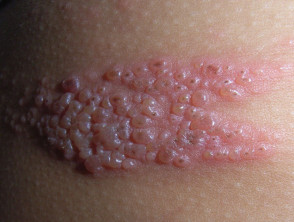
Most men who get genital HPV do not have any symptoms. However, some types of HPV can cause genital warts. Genital warts are single or multiple growths that appear in the genital area. They may be raised, flat, or cauliflower shaped.
In men, genital warts may appear around the anus or on the penis, scrotum (testicles), groin or thighs. Even men who have never had anal sex can get warts around the anus.
Warts may appear within weeks or months after sexual contact with an infected person, or not at all. A person can have the type of HPV that causes genital warts, but never develop any warts.
See "Genital Warts Treatment"
How do men get Genital HPV?
Genital HPV is passed on through genital contact –such as vaginal and anal sex. Both men and women can get HPV – and pass it on - without even realizing it.
Genital warts can also be passed on by a person who has HPV but no visible warts. Since the virus can be “silent” for a long time, people can have genital HPV even if years have passed since they have had sex.
What is the connection between HPV and penile and anal cancers?
Certain types of HPV have been linked to cancer of the anus and penis in men. These cancers are rare –especially in men with healthy immune systems.
The types of HPV that can cause genital warts are not the same as the types that can cause penile or anal cancer.
How common is HPV and associated conditions in men?
Over half of sexually active men in the United States (U.S.) will have HPV at some time in their lives.
- About 1% of sexually active men in the U.S. have genital warts at any one time.
- The American Cancer Society (ACS) estimates that about 1,530 men will be diagnosed with penile cancer in the U.S. in 2006. In this country, penile cancer accounts for about 0.2% of all cancers in men. It is especially rare in circumcised men.
- ACS estimates that about 1,910 men will be diagnosed with anal cancer in 2006. The risk for anal cancer is 17 times higher among gay and bisexual men than among heterosexual men. The risk is also higher among men with compromised immune systems, including those with HIV.
Is there a test for HPV in men?
At the moment, there is no test approved to detect HPV in men. However, there are ways to detect the most common problem caused by HPV in men, genital warts.
Genital warts are usually diagnosed by visual inspection. Some health care providers may use a vinegar solution to help identify flat warts, although this test is not specific for warts.
That means the test may falsely identify normal skin as a wart.
Is there a test to screen for HPV-related cancers in men?
There are currently no tests approved to detect early evidence of HPV-associated cancers in men, as there are for women (Pap tests). Nonetheless, since anal cancer is more common in gay, bisexual, and HIV-positive men, some experts recommend routine anal Pap tests for those populations.
The anal Pap test is used to find abnormal cells in the anus (caused by HPV) that could turn into cancer over time.
However, it is not yet clear that finding and removing abnormal cells from the anus will effectively prevent anal cancer from developing in the future. CDC does not recommend anal cancer screening.
Is there a treatment or cure for HPV?
There is no treatment or cure for HPV. But there are ways to treat the health conditions associated with HPV in men, including genital warts, penile cancer and anal cancer.
Visible genital warts can be treated with medication, surgically removed, or frozen off.
Some of these treatments can be applied by the patient, while others must be performed by a health care provider. No one treatment is best. Warts might return, especially in the first 3 months after treatment. (Genital Warts Treatment)
It is not known whether treatment of genital warts will reduce the chance of passing the virus on to a sex partner. I
f left untreated, genital warts may go away, remain unchanged, or increase in size or number. They will not turn into cancer. For these reasons, some individuals may choose not to get treated, but to see if the warts will disappear on their own.
Should I be worried that I cannot be tested or treated for HPV?
No. HPV is not like other sexually transmitted infections (STIs), which need to be detected and treated. HPV is a virus that lives in the skin, rather than in your body. There is no clear health benefit to knowing you have this virus—since HPV is unlikely to affect your health and cannot be treated. For most men, there would be no need to treat HPV, even if treatment were available— since it usually goes away on its own.
So why should I care about HPV?
While most men will not develop health problems from HPV, some men are at higher risk of disease from HPV. HIV-positive men are more likely to get severe and prolonged cases of genital warts, which may be more resistant to treatment. They are also more likely to develop anal cancer.
It is also important for men to realize that they can unknowingly transmit HPV to their female sex partners.
Compared to heterosexual men, women are at higher risk of developing disease from HPV—most notably, cervical cancer. Cervical cancer in women is much more common than anal or penile cancer in men. According to ACS, more than 9,700 women will be diagnosed with cervical cancer in the U.S. in 2006.
Are there ways to reduce my chances of getting HPV?
Because HPV is so common but usually invisible, the only sure ways to prevent it are not to have sex, or to have sex with only one uninfected person, who is only having sex with you. You can lower your risk by limiting your number of sex partners and choosing partners who have had few or no sex partners.
Condoms may also lower your risk of HPV-associated conditions. Condoms may provide some but not complete protection against HPV, since HPV can infect skin that is not covered by a condom. Condoms have been shown to reduce the risk of genital warts and cervical cancer.
Condoms can also reduce the risk of HIV and some other sexually transmitted infections, when used all the time and the right way.
I hear there's a HPV test for women, but not for men. Why not?
There is now an HPV test for women, which can be used as part of cervical cancer screening and management. This test is not a general check for HPV, and it is not designed to find HPV in men.
There is no general test for HPV that can tell a man or woman his or her “HPV status”.
There is no clear health benefit to knowing if one has the virus—since it usually causes no health problems and goes away on its own.
My partner just found out she has HPV...
-
What does it mean for me?
-
What does that mean for her?
-
What does it mean for us?
HPV is not a sign that you or your partner has been unfaithful in the relationship. HPV can be silent in the body for many years before it is found on a test. She may have had HPV for many years, and there is no way to know when or from whom she got HPV.

English
-
Human Papillomavirus
-
Human Papillomavirus Vaccines: Questions and Answers
-
Human Papilloma Virus Signs and Symptoms
-
Human Papillomavirus Screening
-
Human Papillomavirus Treatment
-
Human Papillomavirus Prevention
-
Human Papillomavirus and Men
-
HPV and Men
-
Human Papillomavirus Infection Treatment
-
Human Papillomavirus Vaccine
-
Human Papillomavirus and Genital Warts
-
Human Papillomavirus Associated Cancers
United States, 2004–2008 -
Preventing Cervical Cancer Worldwide (PDF document)
-
FDA Advisory Panel Recommends Human Papillomavirus Vaccine
.
Actualizado: 26 de Octubre, 2018