Influenza Viruses
There are three types of influenza viruses: A, B, and C.
Influenza Type A
Influenza type A viruses can infect people, birds, pigs, horses, seals, whales, and other animals, but wild birds are the natural hosts for these viruses. Influenza type A viruses are divided into subtypes based on two proteins on the surface of the virus. These proteins are called hemagglutinin (HA) and neuraminidase (NA). There are 15 different HA subtypes and 9 different NA subtypes. Many different combinations of HA and NA proteins are possible. Only some influenza A subtypes (i.e., H1N1, H1N2, and H3N2) are currently in general circulation among people. Other subtypes are found most commonly in other animal species. For example, H7N7 and H3N8 viruses cause illness in horses.
Subtypes of influenza A virus are named according to their HA and NA surface proteins. For example, an "H7N2 virus" designates an influenza A subtype that has an HA 7 protein and an NA 2 protein. Similarly an "H5N1" virus has an HA 5 protein and an NA 1 protein.
Influenza Type B
Influenza B viruses are normally found only in humans. Unlike influenza A viruses, these viruses are not classified according to subtype. Although influenza type B viruses can cause human epidemics, they have not caused pandemics.
Influenza Type C
Influenza type C viruses cause mild illness in humans and do not cause epidemics or pandemics. These viruses are not classified according to subtype.
Strains
Influenza B viruses and subtypes of influenza A virus are further characterized into strains. There are many different strains of influenza B viruses and of influenza A subtypes. New strains of influenza viruses appear and replace older strains. This process occurs through a type of change is called "drift" (see How Influenza Viruses Can Change: Shift and Drift). When a new strain of human influenza virus emerges, antibody protection that may have developed after infection or vaccination with an older strain may not provide protection against the new strain. Thus, the influenza vaccine is updated on a yearly basis to keep up with the changes in influenza viruses.
Human Influenza Viruses versus Avian Influenza Viruses
Humans can be infected with influenza types A, B, and C. However, the only subtypes of influenza A virus that normally infect people are influenza A subtypes H1N1, H1N2, and H3N2. Between 1957 and 1968, H2N2 viruses also circulated among people, but currently do not.
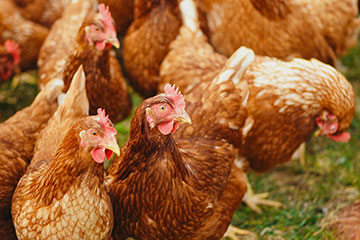
Only influenza A viruses infect birds. Wild birds are the natural host for all subtypes of influenza A virus. Typically wild birds do not get sick when they are infected with influenza virus. However, domestic poultry, such as turkeys and chickens, can get very sick and die from avian influenza, and some avian viruses also can cause serious disease and death in wild birds.
Low Pathogenic versus Highly Pathogenic Avian Influenza Viruses
H5 and H7 subtypes of avian influenza A viruses can be further classified as either highly pathogenic avian influenza (HPAI) or low pathogenic avian influenza (LPAI). This distinction is made on the basis of genetic features of the virus. HPAI is usually associated with high mortality in poultry. It is not certain how the distinction between "low pathogenic" and "highly pathogenic" is related to the risk of disease in people. HPAI viruses can kill 90 to 100% of infected chickens, whereas LPAI viruses cause less severe or no illness if they infect chickens. Because LPAI viruses can evolve into HPAI viruses, outbreaks of H5 and H7 LPAI are closely monitored by animal health officials.
How Influenza Viruses Change: Drift and Shift
Influenza viruses can change in two different ways.
One type is called "antigenic drift," which occurs through small changes in the virus that happen continually over time. Antigenic drift produces new virus strains that may not be recognized by antibodies to earlier influenza strains. This process works as follows: a person infected with a particular flu virus strain develops antibody against that virus. As newer virus strains appear, the antibodies against the older strains no longer recognize the "newer" virus, and infection with a new strain can occur. This is one of the main reasons why people can get the flu more than one time. In most years, one or two of the three virus strains in the influenza vaccine are updated to keep up with the changes in the circulating flu viruses. For this reason, people who want to be immunized against influenza need to receive a flu vaccination every year.
The other type of change is called "antigenic shift." Antigenic shift is an abrupt, major change in the influenza A viruses, resulting in a new influenza virus that can infect humans and has a hemagglutinin protein or hemagglutinin and neuraminidase protein combination that has not been seen in humans for many years. Antigenic shift results in a new influenza A subtype. If a new subtype of influenza A virus is introduced into the human population, if most people have little or no protection against the new virus, and if the virus can spread easily from person to person, a pandemic (worldwide spread) may occur (see Influenza Pandemics).
Influenza viruses are changing by antigenic drift all the time, but antigenic shift happens only occasionally. Influenza type A viruses undergo both kinds of changes; influenza type B viruses change only by the more gradual process of antigenic drift.
centers for Diseases Control and Prevention
http://www.cdc.gov/